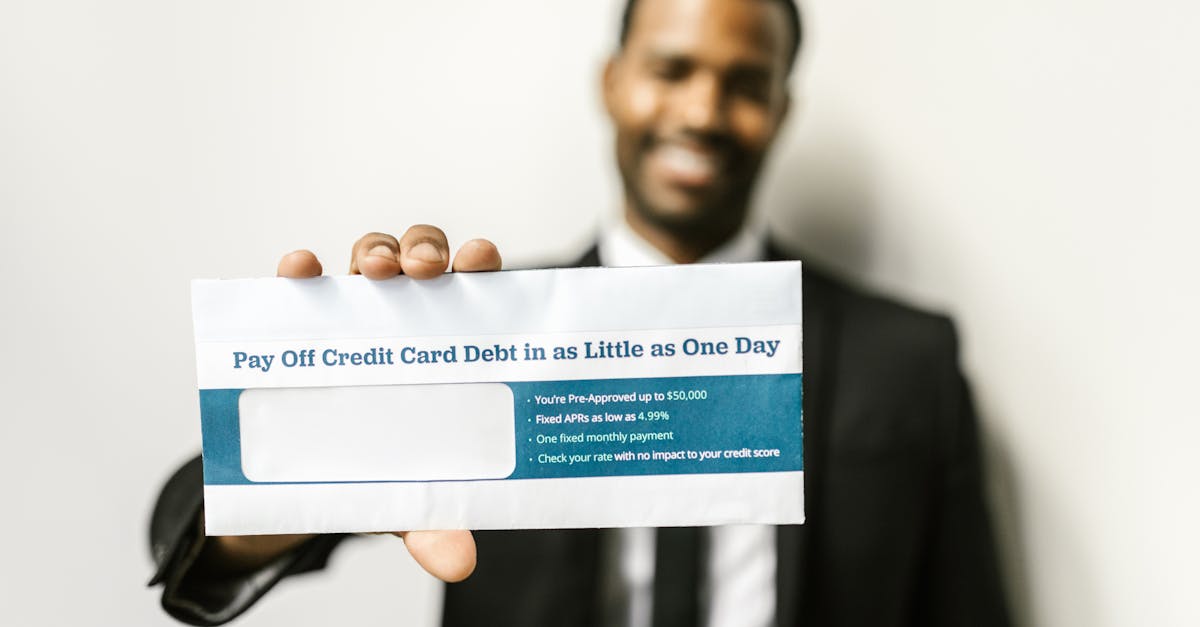
For many, a car loan is a necessary evil. You need a vehicle to get to work, run errands, and live your life, but that monthly payment can feel like a heavy anchor. I’ve been there. I remember staring at my car loan statement, seeing the endless rows of interest charges, and feeling like I was just treading water. It felt like I was paying for the same car three times over. The conventional wisdom often tells you to just make your payments and forget about it, but in my experience, that’s leaving a lot of money on the table.
What changed everything for me was developing a clear, actionable plan to tackle my car loan head-on. It wasn’t about some magic trick or a windfall; it was about understanding the mechanics of the loan and making intentional choices. The mistake I see most often is people thinking that an early payoff is only for those with extra cash to burn. That’s simply not true. Even with a modest income, a strategic approach can drastically reduce the total cost of your car and free up hundreds of dollars in your budget each year. This isn’t just about saving money; it’s about reclaiming a piece of your financial freedom. If you’re tired of that monthly car payment, this checklist is for you.
Key Takeaways
- Prioritize understanding your loan’s terms to identify any early payoff penalties.
- Adjust your budget to consistently make larger payments, even small increases add up.
- Employ the ‘extra payment’ strategy to directly reduce your principal balance.
- Consider refinancing to a lower interest rate to accelerate your payoff timeline.
Understand Your Loan’s DNA: The Fine Print That Matters
Before you even think about making an extra payment, you need to dissect your loan agreement. In my experience, this is the most overlooked step, and it can save you from costly surprises. When I first decided to pay off my car loan early, I nearly made a mistake that would have cost me hundreds. I assumed all loans were the same, but the truth is, lenders have different rules.
First, check for any prepayment penalties. While less common on standard consumer car loans these days, some older contracts or loans from specific lenders might still include them. A prepayment penalty means the lender charges you a fee for paying off your loan before its scheduled term. This fee is usually a percentage of the remaining balance or a set number of months’ interest. If your loan has one, calculate if the penalty outweighs the interest you’d save by paying early. In many cases, it still makes sense to pay early, but you need to know the exact numbers.
Next, confirm how extra payments are applied. This is absolutely critical. Some lenders automatically apply any overpayment to the next month’s scheduled payment, not directly to the principal. While this effectively ‘pushes back’ your next due date, it doesn’t accelerate your debt payoff as much because you’re still accruing interest on the original, higher principal balance for longer. What you want is for all extra payments to be applied directly to the principal balance. This immediately reduces the amount of money your interest is calculated on, leading to significant savings over time. I learned this the hard way with my first car loan; I was making extra payments thinking I was crushing the debt, only to realize I was just giving myself a buffer for future payments. Now, I always explicitly state, in writing if possible, that any additional funds are for principal reduction only.
Finally, grasp your interest rate and loan term. Your interest rate dictates how much extra you’re paying on top of the principal. The higher the rate, the more impact an early payoff will have. The loan term (e.g., 60 months, 72 months) shows you how long you’re committed to that debt. A longer term generally means lower monthly payments but significantly more interest paid over the life of the loan. Knowing these numbers is like having a financial GPS for your debt, guiding your decisions with real data, not guesswork.
Budgeting for More: Finding the Money, Even Small Amounts
“Just pay more” sounds simple, but for most of us living on real paychecks, it’s easier said than done. However, in my experience, even small, consistent increases can make a monumental difference. The goal isn’t to suddenly find an extra $500 a month; it’s about systematically finding and allocating extra dollars. What changed everything for me was treating my budget not as a restrictive chore, but as a roadmap to financial freedom.
Start with a budget audit. This isn’t just looking at your big expenses; it’s meticulously tracking every single dollar for at least a month. Use an app, a spreadsheet, or even a notebook. The first time I did this, I was shocked by how much I was spending on things I barely noticed – multiple streaming services I rarely watched, coffee runs that added up to a small fortune, and impulse purchases. Identifying these “silent drains” on your budget is the first step to redirecting those funds.
Next, implement strategic cuts and reallocations. Look for areas where you can trim without feeling deprived. Could you pack your lunch two more days a week? That might save you $20. Could you switch to a cheaper phone plan, or call your internet provider to negotiate a lower rate? These small wins add up. Imagine finding an extra $50 a month. On a $20,000 car loan at 6% interest over 60 months, adding just $50 to your payment each month could save you hundreds in interest and shave months off your loan term. This isn’t theoretical; this is real math that applies directly to your wallet. Even $25 a month can make a noticeable impact over time.
Consider a “found money” strategy. Did you get a bonus at work? A tax refund? A gift? Instead of seeing it as free money for discretionary spending, view it as an opportunity to attack your debt. This is where many people fail; they treat windfalls as permission to spend. What I do now is dedicate at least 50% of any unexpected income directly to my highest-interest debt, which, for many, is a car loan. This approach allows you to make significant dents in your principal without feeling the pinch of regular budget cuts. It’s about being proactive with every dollar that comes your way, rather than letting it slip through your fingers.
Payment Power-Ups: Strategies to Accelerate Your Payoff
Once you understand your loan and have identified extra funds, it’s time to put those dollars to work with specific payment strategies. This is where your intentional actions directly translate into saved interest and a faster path to debt freedom. The mistake I see most often is simply making an occasional extra payment without a cohesive strategy. What actually works is consistency and a clear understanding of how each payment impacts your principal.
My go-to method is the bi-weekly payment strategy. If your monthly payment is, say, $400, instead of paying $400 once a month, you pay $200 every two weeks. Because there are 52 weeks in a year, this results in 26 bi-weekly payments, which equals 13 monthly payments over the course of the year. That extra full payment each year directly attacks your principal. On a 60-month loan, this simple shift can reduce your loan term by several months and save you hundreds in interest. It’s a subtle change that compounds significantly, and many lenders can set this up for you automatically.
Another powerful tactic is to always round up your payments. If your payment is $387.23, round it up to $400. That seemingly small extra $12.77 may not feel like much on its own, but consistently doing this month after month adds up. Over a year, that’s an extra $153.24 applied directly to your principal. It’s about finding those marginal gains that don’t feel like a huge sacrifice but contribute to your overall goal. This is a behavioral trick that changed everything for me; it made me feel like I was winning small victories constantly.
Finally, when you have larger “found money” as discussed in the budgeting section, make a principal-only payment. As I mentioned earlier, explicitly communicate to your lender that this extra money should be applied directly to the principal, not to future payments. This is crucial because it immediately lowers the base amount on which your interest is calculated. Imagine you have a $10,000 principal balance. If you make a $500 principal-only payment, your interest for the next period is calculated on $9,500, not $10,000. This is the most efficient way to reduce the total cost of your loan and accelerate your payoff. It’s not just about making more payments; it’s about making smarter payments.
The Refinancing Check: Is a Lower Rate Your Shortcut?
Sometimes, no matter how diligently you budget or how strategically you pay, your current loan terms might be holding you back. This is where considering a refinance becomes a critical step in your early payoff checklist. In my experience, a lower interest rate can drastically reduce the total cost of your loan, often more effectively than small extra payments alone, especially if your credit score has improved since you first bought the car. The mistake I often see is people assuming refinancing is only for those struggling to make payments. It’s also a powerful tool for acceleration.
First, evaluate your current credit score. When you initially bought your car, your credit might not have been in its best shape, leading to a higher interest rate. If you’ve been making consistent, on-time payments on all your debts, your credit score has likely improved. A higher score qualifies you for better rates. Check your score through one of the free credit report services or your bank; knowing this number is your first step.
Next, shop around for new lenders. Don’t just go back to your original lender. Look at credit unions, online lenders, and other banks. Each lender has different criteria and offers. I always advise getting at least three different quotes. This competitive shopping can reveal significantly lower rates than you might expect. What I look for is a rate that’s at least 1-2% lower than my current rate to make the effort of refinancing worthwhile.
Consider the new loan term. While a lower interest rate is great, be cautious of extending your loan term. If you refinance a 3-year-old, 60-month loan into a new 60-month loan, you’re effectively starting over and might pay more interest in the long run, even with a lower rate. The goal should be to get a lower rate and maintain or shorten your remaining loan term. If your goal is an early payoff, refinancing to a lower rate with a shorter term is the ideal scenario, as it compounds your savings even faster. Remember, the true value of refinancing for early payoff comes from combining a lower interest rate with your continued commitment to making extra payments, or at least maintaining your original payment amount even if the new minimum is lower.
Unforeseen Costs: Protecting Your Payoff Progress
As satisfying as it is to chip away at your car loan, it’s crucial to prepare for the unexpected. Nothing derails debt payoff faster than an unforeseen expense. In my experience, neglecting to factor in these potential costs is the single biggest reason people lose momentum. What changed everything for me was realizing that financial planning isn’t just about paying down debt; it’s about building a robust financial foundation that supports your debt payoff goals, rather than sacrificing them.
First, prioritize building or maintaining an emergency fund. I know, it sounds counterintuitive to save money while you’re trying to pay off debt. However, a small emergency fund – even $1,000 to $2,000 – acts as a critical buffer. If your car needs a sudden repair, you’ll tap into your emergency fund instead of putting the expense on a high-interest credit card, which would completely undermine your debt payoff efforts. Think of your emergency fund as insurance for your debt payoff plan. Without it, one unexpected tire blowout or engine light could send you spiraling back into more debt.
Next, consider future car maintenance. As your car ages, it will inevitably require maintenance beyond oil changes. Budgeting for these larger, predictable expenses (like new tires, brakes, or a major service interval) allows you to pay for them with cash, again, preventing new debt. I always keep a sinking fund specifically for car maintenance. I estimate my annual maintenance costs and divide by twelve, setting aside that amount each month. That way, when a big repair bill comes, I’m ready, and my debt payoff doesn’t skip a beat.
Finally, be aware of potential emotional pitfalls. Paying off debt is a marathon, not a sprint, and there will be moments when you feel discouraged or tempted to use your extra funds for something else. What I’ve found helpful is to celebrate small milestones along the way – perhaps when you hit a certain principal reduction, or when you’ve shaved a full year off your loan term. Don’t underestimate the power of positive reinforcement. And remember why you’re doing this: for the financial freedom, the reduced stress, and the peace of mind that comes with owning your car outright. This isn’t just about numbers; it’s about changing your relationship with your money and building lasting financial resilience.
Frequently Asked Questions
Is it always a good idea to pay off a car loan early?
It’s usually a good idea, especially if your interest rate is high (above 5-6%). Paying early saves you money on interest and frees up your monthly cash flow. However, if your loan has significant prepayment penalties or if you have higher-interest debt (like credit card debt), it might be wiser to tackle those first. Always check your loan terms for penalties and compare interest rates across all your debts.
How much interest can I really save by paying off my car loan early?
The amount saved depends on your original loan amount, interest rate, and how early you pay it off. For example, on a $20,000 loan at 6% over 60 months, paying an extra $100 per month could save you over $500 in interest and shorten your loan by about seven months. Even smaller consistent extra payments add up significantly over time because you’re reducing the principal balance that interest is calculated on.
Will paying off my car loan early hurt my credit score?
Paying off a loan early generally has a neutral to slightly positive effect on your credit score. It reduces your overall debt and improves your debt-to-income ratio, which are positive signals. While it closes an account, which can slightly reduce your average account age, the benefits of lower debt usually outweigh this minor effect. Consistent on-time payments are the most important factor for a good credit score.
Should I prioritize paying off my car loan or saving for retirement?
This depends on your specific situation. If your car loan has a high interest rate (e.g., above 6-7%), paying it off early might offer a guaranteed “return” that’s hard to beat. However, if your car loan has a very low interest rate and you’re missing out on employer 401(k) matches, that match is typically a 100% immediate return on your investment, making it a higher priority. A balanced approach often works best: ensure you’re contributing enough to your retirement to get any employer match, then aggressively tackle high-interest debt, including car loans, before increasing retirement contributions further.
Can I make an extra payment on my car loan at any time?
Yes, most lenders allow you to make extra payments at any time. However, it’s crucial to specify that these extra funds should be applied directly to the principal balance, not to advance your next due date. If you don’t specify, some lenders will automatically apply it to your next scheduled payment, which means you won’t save as much interest. Always check with your lender and confirm how additional payments are processed.
Conclusion
Paying off a car loan early might seem like a daunting task, but it’s entirely achievable with a strategic approach and consistent effort. I’ve walked this path, and the sense of relief and financial freedom that comes from eliminating a monthly car payment is truly empowering. It’s not just about saving a few hundred dollars; it’s about taking control of your financial future and redirecting those funds towards other important goals, whether that’s building a bigger emergency fund, investing for retirement, or saving for a down payment on a house.
By dissecting your loan terms, making thoughtful adjustments to your budget, leveraging smart payment strategies, and considering refinancing, you can significantly accelerate your payoff timeline. Don’t let your car loan be a silent drain on your finances any longer. Take the first step today: pull up your loan statement, analyze the numbers, and commit to finding even a small amount to put towards that principal. Your future self (and your wallet) will thank you for it.